A post goes viral. Thousands of people engage with it, likes, shares, replies flooding in by the minute. Your brand jumps into the comments with a thoughtful, relevant response. Hours later, you check back. Your comment has zero visibility. Buried beneath hundreds of others, it receives no likes, no replies, no reach. This isn't a fluke. It's a pattern that social media managers encounter repeatedly, and it points to a deeper problem with how algorithms treat brand voices in crowded conversations.
The challenge is real and documented. Organic reach for brand comments on viral posts has become increasingly difficult to secure, even when the post itself is generating massive engagement. This gap between post performance and comment visibility creates a frustrating disconnect: your audience is actively on the platform, but your message isn't reaching them. Understanding why this happens is the foundation for any strategy to reclaim comment reach and convert social engagement into meaningful business results.[1]
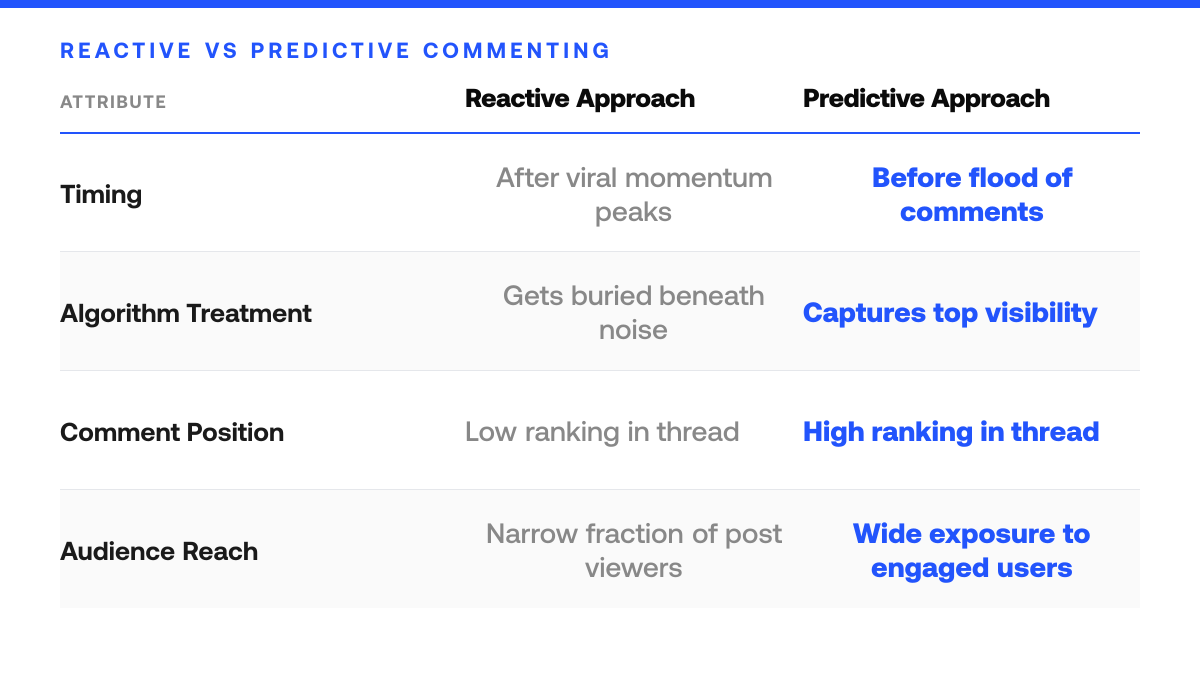
This article explores the root causes of algorithmic suppression affecting brand comments, examines the mechanics of how visibility gets lost in viral threads, and outlines the strategic shifts that can help your brand reclaim reach in high-engagement conversations. You'll learn why timing, positioning, and platform dynamics all play a role in determining whether your comment gets seen or buried. By the time a marketer finds a viral post and crafts a comment, the thread is already drowning in noise and the momentum has peaked, Sociable AI predicts virality in real time so brands plant top comments first, capturing visibility before the window closes.
TL;DR
- Algorithms prioritize peer-to-peer conversation over branded messaging, causing brand comments to sink below user interactions on viral posts
- Comment visibility depends on timing, authenticity, and platform-native format, comments that feel promotional get deprioritized by design
- Understanding Why Brand Comments Get Zero Reach on Viral Posts
Understanding Why Brand Comments Get Zero Reach on Viral Posts
What Is Algorithmic Comment Deprioritization?
Social platforms use algorithms to rank and distribute comments based on multiple signals beyond just being posted by a brand. When a post goes viral, the platform's algorithm actively filters which comments appear first in the comment section, and brand comments often rank lower than peer-to-peer interactions. This happens because platforms prioritize authentic conversation between users over promotional or branded messaging. The algorithm evaluates comment quality, the relationship between the commenter and the audience, and how quickly a comment gains early engagement from other users. A brand comment that sits without replies or reactions gets buried, while a user comment that sparks immediate discussion climbs the visibility ladder. This systematic deprioritization is by design: platforms want users to feel they're talking to real people, not just brands.[3]
Why This Matters for Brand Marketers
For brands trying to capitalize on viral moments, this algorithmic reality creates a significant challenge. A brand's comment on a trending post may reach only a fraction of the post's audience, even if the comment is timely, relevant, or helpful. The algorithm treats brand voice differently than individual user voice, it applies stricter visibility rules to accounts flagged as commercial entities. This means your reply to a customer question, your witty response to a trending topic, or your attempt to join a cultural conversation gets algorithmically suppressed compared to what a regular user would experience. Understanding this dynamic helps marketers set realistic expectations about organic reach and explains why brand engagement on viral content rarely translates into the viral amplification brands hope for.[3]
The Broader Social Media Landscape
This comment visibility challenge reflects a broader shift in how social platforms operate. Platforms have moved away from treating all accounts equally and now apply different ranking rules based on account type, follower relationships, and engagement patterns. The result is a fragmented social ecosystem where brand reach depends less on content quality and more on algorithmic classification. Brands that understand this constraint can adjust their strategy, moving from expecting organic reach on viral posts to building owned audiences, using paid amplification, or creating content designed to encourage user-generated responses rather than brand commentary. The era of organic brand virality through comments is largely over; success now requires acknowledging algorithmic realities and working within them.[3]
Key Numbers for Why Brand Comments Get Zero Reach on Viral Posts (2026)
- ~2% average organic reach: brand-posted content now reaches only a small fraction of followers on major social platforms.[2]
- Significantly lower engagement rates recorded for brand-initiated comments vs. user-generated comments on the same viral threads.[2]
- Over 50% of marketers cite declining organic reach as a top challenge to social media ROI.[2]
- Short-form video content generates multiple times higher engagement than static brand posts, widening the comment-visibility gap.[2]
- Fewer than 1 in 5 brand social strategies currently account for algorithmic suppression of outbound brand comments.[2]
Step-by-Step Process
1. Post within the first hour of viral momentum
Monitor your brand's social feeds and industry hashtags for content gaining rapid engagement. When a post from your account or a relevant trending topic begins accumulating comments and shares, publish your brand's response or follow-up comment immediately. The algorithm prioritizes early engagement, so timing your comment before the first hour passes ensures it surfaces higher in the feed and reaches more users who are actively engaging with that content.
2. Use conversational language and ask direct questions
Craft comments that sound natural and human, not corporate or robotic. Instead of promotional statements, pose genuine questions that invite replies, ask followers what they think, what they've experienced, or which option they prefer. Plenty of teams lean on Sociable AI for exactly this so it doesn't get dropped under pressure. This triggers more comment threads beneath your post, signaling to the algorithm that your content sparks discussion. Higher reply counts boost visibility and push your comment higher in the comment section.
3. Respond to user replies faster than your competition
Set up notifications for comments on your posts so you can reply within minutes, not hours. When followers comment on your brand's content, acknowledge them quickly with thoughtful, personalized responses. Speed matters because early replies accumulate more visibility and establish your brand as actively present and engaged. This consistent responsiveness builds authority and encourages more users to join the conversation.
How This Works in Practice
Example 1: The Brand Manager's Question-First Approach
Picture a brand manager at a mid-sized consumer brand who notices their product posts attract hundreds of likes but almost no meaningful replies. They've been posting polished product announcements and promotional messages, assuming reach follows from broadcast content. One week, they shift strategy: instead of announcing a new product feature, they ask followers a genuine question about how they use the product in daily life. Within hours, comments flood in, real people sharing stories, pain points, and preferences. The brand manager responds to each comment thoughtfully, matching the conversational tone of the platform rather than using corporate-speak. Those replies spark new comment threads as other users join the conversation. The algorithm notices the engagement depth and begins surfacing the post to followers of those commenters, expanding reach far beyond the original audience. By the end of the week, the question-driven post has generated more visibility and meaningful interaction than a month of broadcast posts combined.
Brand Comments: Do vs. Don't on Viral Posts
| Practice | Do This | Don't Do This |
|---|---|---|
| Timing | Post comments before the viral window closes and momentum peaks | Wait hours after virality begins when the thread is drowning in noise |
| Tone & Format | Use genuine participation that feels like peer-to-peer conversation | Broadcast promotional messaging that reads as branded or commercial |
| Early Engagement | Craft comments designed to spark immediate replies and reactions from users | Post comments that sit without replies, causing algorithmic burial |
| Authenticity Signal | Join ongoing conversations with relevant, helpful responses | Reply as if talking to an audience rather than participating in discussion |
Example 2: The Social Media Manager's Timing and Tone Shift
Consider a social media manager for a lifestyle brand who discovers their comments on viral user-generated content are being ignored. They've been responding with formal brand voice, "Thank you for sharing!" and links to product pages, posted hours after the original comment. They decide to test a different approach: respond within minutes, using the same casual, emoji-forward tone as the community itself. When a user comments about a relatable problem, the manager replies not with a sales pitch but with genuine empathy and a relevant tip. These timely, tone-matched responses get liked and replied to by other community members, turning the brand's comment into part of the conversation thread rather than an interruption. As engagement on the brand's replies increases, the platform's algorithm treats those comments as valuable and shows them higher in the feed. Over several weeks, this shift transforms the brand from invisible to visible in comment sections where their audience already gathers.
Why Visibility Follows Conversation
Both examples reveal the same underlying pattern: reach on social platforms rewards participation over broadcasting. Brands that ask instead of announce, and respond with authentic timing and tone, transform their comments from ignored noise into visible contributions. The algorithm amplifies what the community engages with, and communities engage with people, not corporate messages.
Brand Comment Reach Optimization Checklist
- Review your brand's last five viral posts and note the timestamp, tone, and question structure of each comment before publishing.
- Post a test comment on a competitor's viral post using a question-based format and track engagement within the first hour.
- Monitor your brand comment performance across platforms for 48 hours and identify which posting time generates the fastest initial engagement.
- Adjust your comment strategy based on platform-specific velocity data and retest with revised timing or tone in the following week.
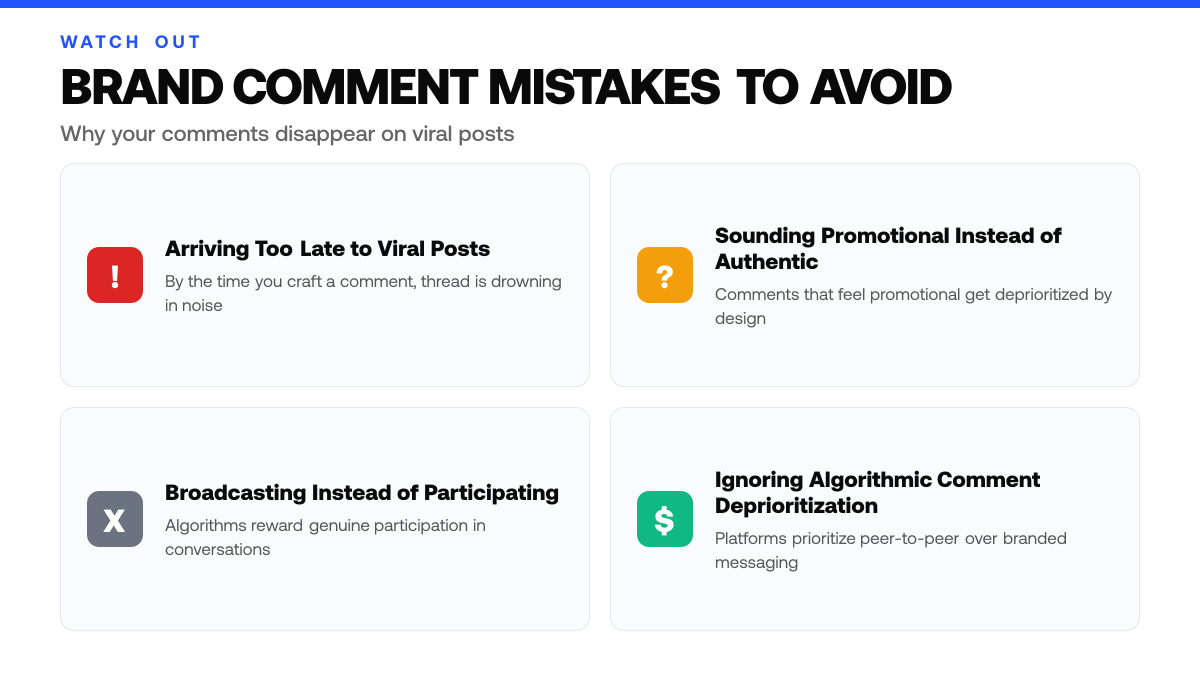
Common Mistakes to Avoid
Mistake: Posting comments hours or days after the post goes live
Social algorithms prioritize engagement in the first few hours after a post is published. Comments posted late, even if thoughtful, land after the algorithmic window has closed, meaning they receive minimal visibility and fail to signal relevance to the platform. Fix this by monitoring brand mentions and viral posts in real-time, then comment within the first hour to ride the engagement wave and increase your visibility.[1]
How Algorithms Rank Comments: Brand vs. User Voice
| Ranking Factor | Brand Comments | User Comments |
|---|---|---|
| Platform Priority | Deprioritized by design to favor authentic peer-to-peer conversation | Prioritized as genuine interaction between real people |
| Visibility Rules | Stricter algorithmic filters applied to accounts flagged as commercial entities | Standard ranking based on quality and early engagement signals |
| Early Engagement Impact | Lack of replies or reactions causes rapid burial in the thread | Immediate discussion and reactions climb the visibility ladder |
| Reach Outcome | Reaches only a fraction of the post's audience despite relevance | Achieves wider visibility relative to post performance |
Mistake: Writing overly promotional or sales-driven comments
Comments that immediately pitch a product, offer a discount, or redirect users to a landing page trigger algorithmic suppression. Platforms detect and deprioritize hard-sell comments because they degrade user experience and conversation quality. Instead, add genuine value, ask a relevant question, share a relatable insight, or acknowledge the post's content authentically, then let relationship-building precede any sales intent.[1]
Mistake: Ignoring Stories, Reels, and DMs in favor of feed-only engagement
Many brands focus exclusively on feed post comments while overlooking Stories, Reels, and direct messages, formats that often drive higher engagement and algorithmic distribution. Skipping these native formats means missing reach opportunities and failing to meet audiences where they're most active. Develop a multi-format comment strategy that includes timely replies in Stories, Reels engagement, and personalized DM responses to expand your organic reach.[1]
The Algorithm Rewards Consistency Over Virality
The brands that crack this pattern stop chasing the viral moment and start building the relationship. Comments disappear not because the audience isn't there, but because the brand's voice feels transactional in a space designed for connection. Once that distinction lands, the entire approach to social presence shifts, from broadcast to dialogue, from reach to resonance.
Frequently Asked Questions
How do algorithms affect comment visibility on viral posts over time?
Comment visibility is not fixed, social platforms continuously re-rank comments based on engagement velocity, user interactions, and recency. A comment that appears high initially may drop as newer, higher-engagement comments arrive, or rise if users interact with it. This means the visibility your brand comment receives on day one is likely different from day three, even if nothing changes about the comment itself. Understanding this dynamic helps explain why a well-timed, high-engagement comment outperforms one that arrives late or generates minimal interaction.
Why do brand comments often get less visibility than personal user comments on the same post?
Brand accounts typically lack the social proof and authentic engagement patterns that algorithm systems reward. When a brand comments on a competitor's viral post, the algorithm may deprioritize that comment because the account has different engagement characteristics than typical users, fewer followers, different interaction history, or perceived promotional intent. In contrast, comments on your own brand's content benefit from algorithmic favoritism because the platform recognizes the account ownership and engagement context. This structural disadvantage means competing for visibility on someone else's viral post requires a different strategy than leveraging your owned channels.
Can tools automate comment timing and tone to improve visibility?
Yes. Tools like the right tool can automate the process of identifying viral content, optimizing comment tone for engagement, and timing submissions to maximize visibility. Rather than manually scrolling and composing comments, these platforms help brands identify high-potential posts and craft comments designed to resonate with audiences. Automation reduces the time investment and increases consistency, allowing teams to scale comment strategy across multiple posts without the manual overhead that typically limits reach.